
Japanese Shiso Leaf Meatballs (Tsukune with a Glossy Soy-Mirin Glaze)
Fluffy chicken meatballs, a sticky sweet-salty glaze, and a golden egg yolk for dipping.

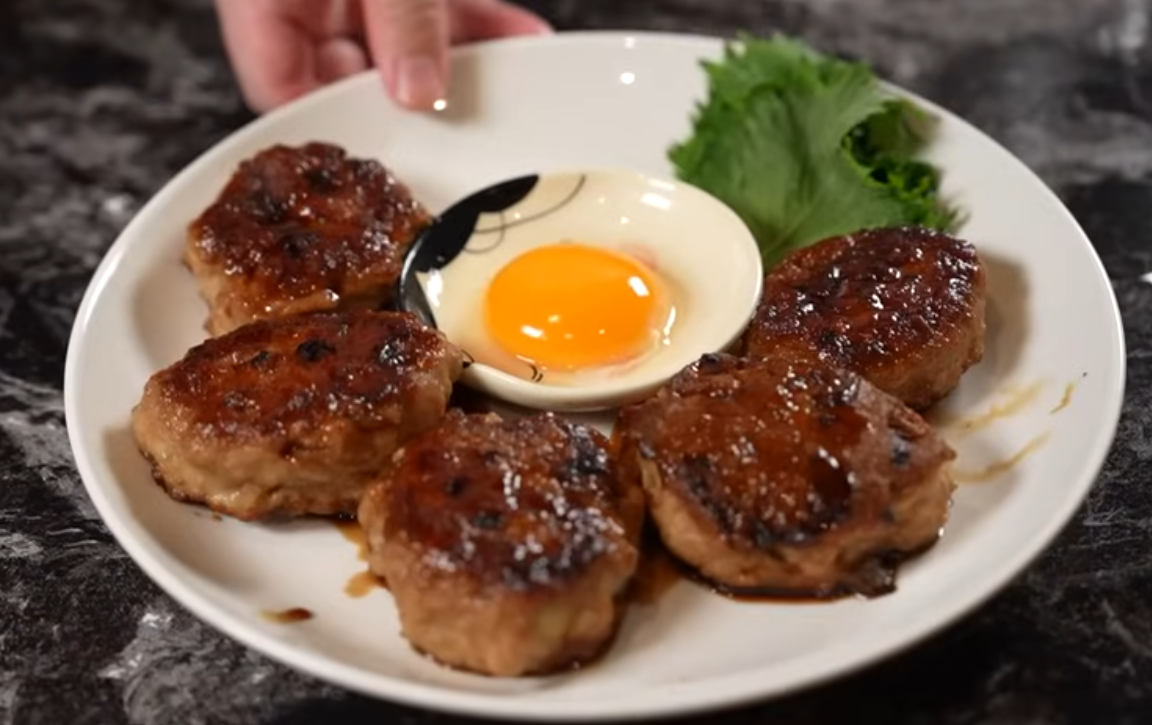
Japanese shiso leaf meatballs are tender, juicy chicken meatballs glazed in a shiny soy and mirin sauce and served on a bed of fresh green perilla. In Japan they are called tsukune, and you will find them on almost every yakitori menu. This tsukune recipe Japanese home cooks rely on takes about 30 minutes and needs one pan.
What makes them special is the texture. They are light and springy rather than dense, with a sweet-savory glaze that clings to every curve. Wrapping a meatball in a shiso leaf and dragging it through a raw egg yolk is the classic way to eat them, and it turns a simple Japanese dinner into something that feels a little bit special.
If you have been looking for an easy Japanese meatball recipe that doesn’t need a grill or skewers, this is a good place to start. It is one of those Asian inspired dishes that looks impressive on the plate but uses ordinary ingredients and simple technique.
Why This Recipe Works
The fluffy texture comes from how the meat is handled. Mixing the ground chicken with a twisting motion, then kneading with spread fingers, develops just enough stickiness to bind the meatballs while trapping air inside. Whipping in the egg white adds more lift, so the meatballs stay soft instead of turning bouncy and tight.
Chicken thigh matters here too. Its extra fat keeps the meatballs juicy through cooking. Grated ginger cuts through any poultry smell, finely chopped onion adds sweetness and small pockets of moisture, and a teaspoon of potato starch absorbs excess liquid so the mixture holds together without being packed with breadcrumbs.
Finally, the cooking method is two-stage. A quick sear builds color, then a splash of sake and a covered pan let the meatballs steam through gently. The glaze goes in last, on low heat, so it reduces into a lacquer instead of scorching.
Light hands make light meatballs: mix to create air, then shape without squeezing.
Tips Before You Start
Use chicken thigh if you can. Lean breast meat gives a drier, firmer meatball. If you only have breast, ask the butcher for the fattier grind or add a teaspoon of neutral oil to the mix.
Separate the egg carefully. The white goes into the meat and the yolk is saved for dipping. Any yolk in the white won’t ruin the meatballs, but keep the yolk whole for the topping.
Quick Recipe Information
Ingredients
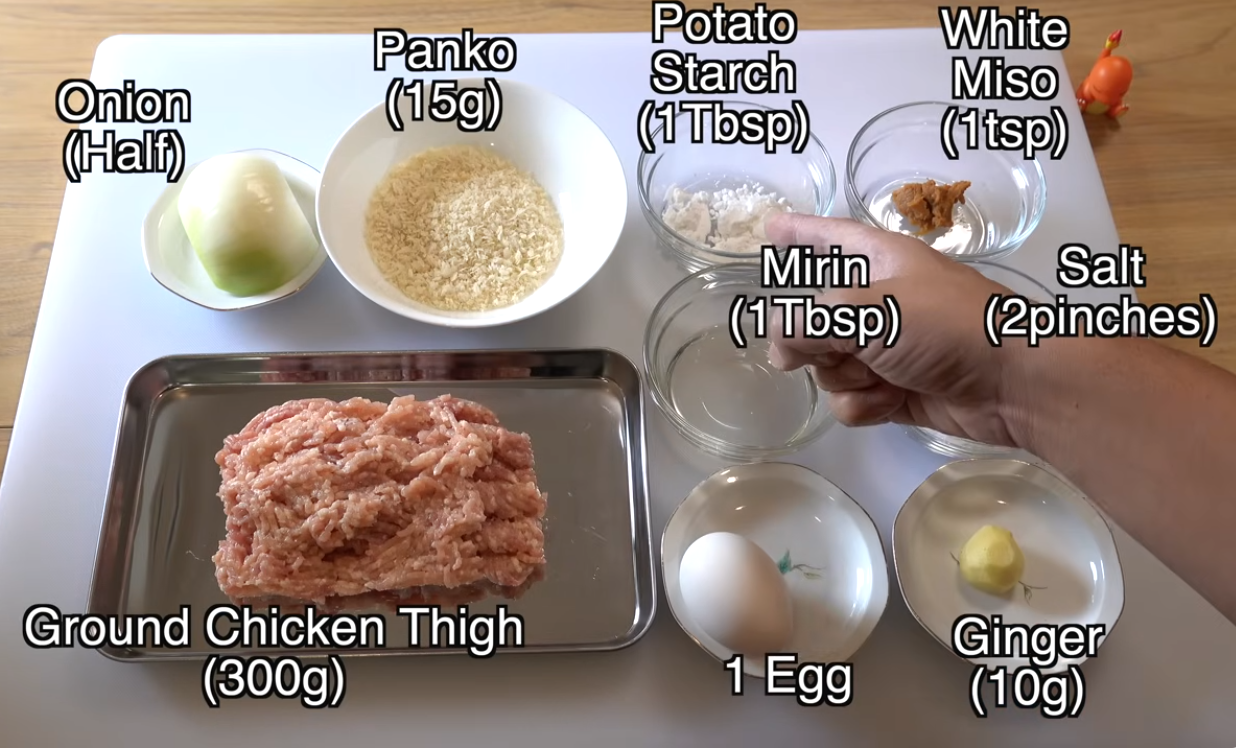
- 200 g (7 oz) ground chicken, preferably thigh (fat keeps them juicy; breast works but is drier)
- ½ small onion, finely chopped (sweetness and texture; shallot works too)
- 15 g (about 1 tbsp) fresh ginger, grated (removes meaty odor; do not skip)
- 1 egg, separated (the white lightens the mix; the yolk is the dipping sauce)
- 1 tbsp soy sauce (seasons the meat; use tamari for gluten-free)
- ½ tbsp sake (tenderizes; dry white wine is a substitute)
- 1 tsp potato starch (absorbs moisture and binds; cornstarch works)
- 1 tsp neutral oil for the pan, plus a little more for your hands
- 2 tbsp sake, for steaming
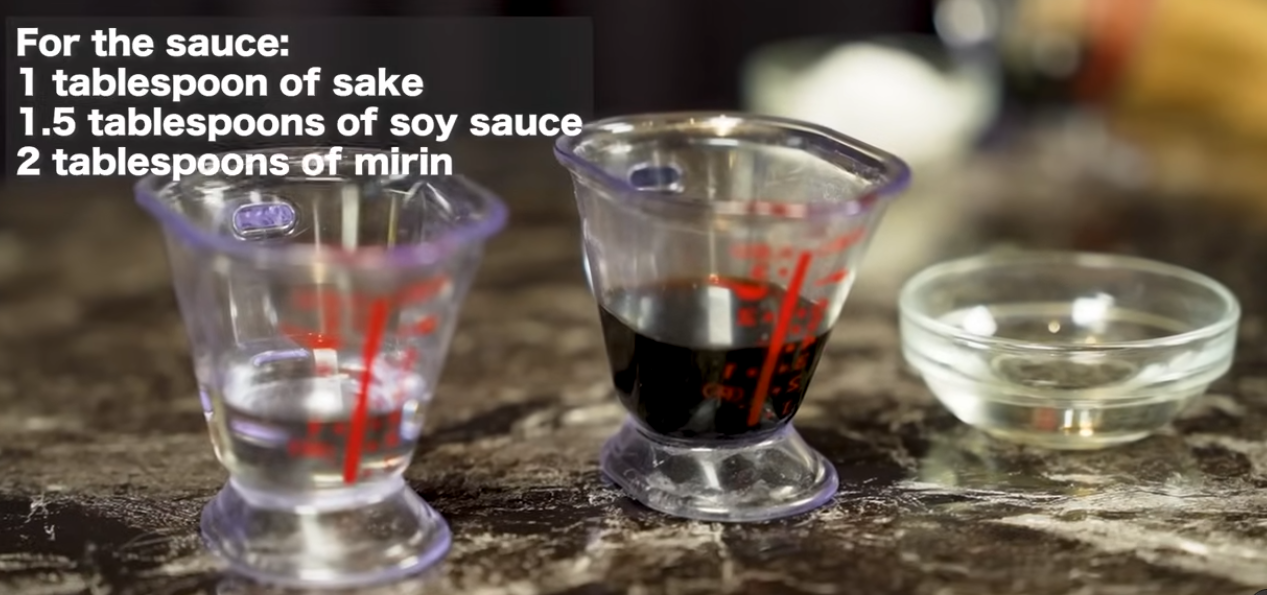
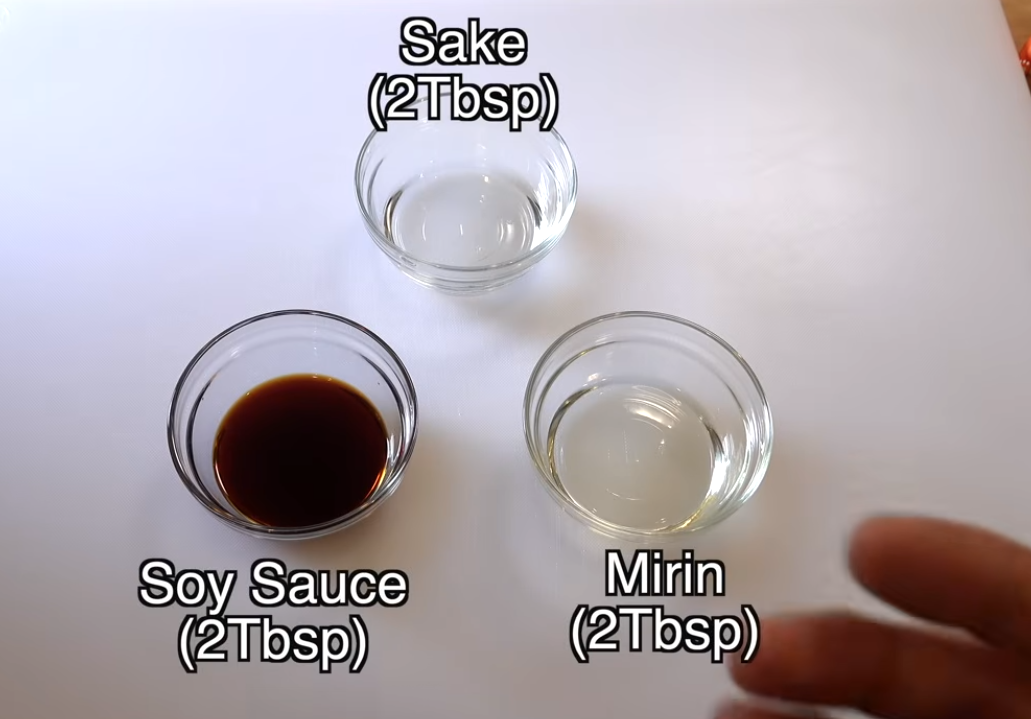
- 1½ tbsp soy sauce
- 1 tbsp sake
- 2 tbsp mirin (adds gloss and sweetness; a pinch of sugar in water can fill in)
- 5 shiso (perilla) leaves (fresh, herby lift; basil and mint work)
- 1 reserved egg yolk (use a pasteurized egg if you prefer)
Equipment Needed
- Large non-stick skillet with a tight-fitting lid
- Two mixing bowls
- Box grater or ginger grater
- Tongs and a small spoon
Step-by-Step Instructions
- Prep the egg and onion. Separate the egg, keeping the yolk in a small bowl for topping and the white nearby. Finely chop the onion by making horizontal and vertical cuts, then slicing across. Small pieces disappear into the mix instead of breaking it apart.
- Season the chicken. In a large bowl, combine the ground chicken with 1 tbsp soy sauce, ½ tbsp sake and the grated ginger. The seasoning goes in first so it can penetrate the meat before anything else dilutes it.
- Mix for air. Twist the meat with your hand to work the seasonings in, then spread your fingers like a whisk and knead quickly. Stop when it looks sticky yet fluffy, not smooth and paste-like.
- Add the egg white. Whip it into the meat for 2 to 3 minutes. The mixture should look visibly lighter and fluffier.
- Fold in onion and starch. Mix in the chopped onion and 1 tsp potato starch until evenly combined. The mixture will be soft and slightly tacky.
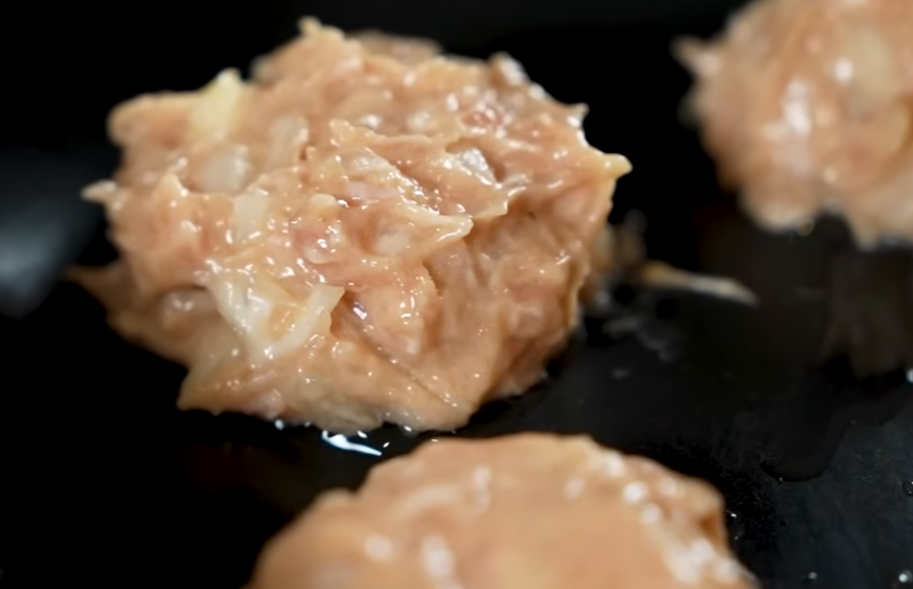
- Shape gently. Wet or lightly oil your hands and form 5 balls. Place each into a lightly oiled skillet over medium heat without flattening it.
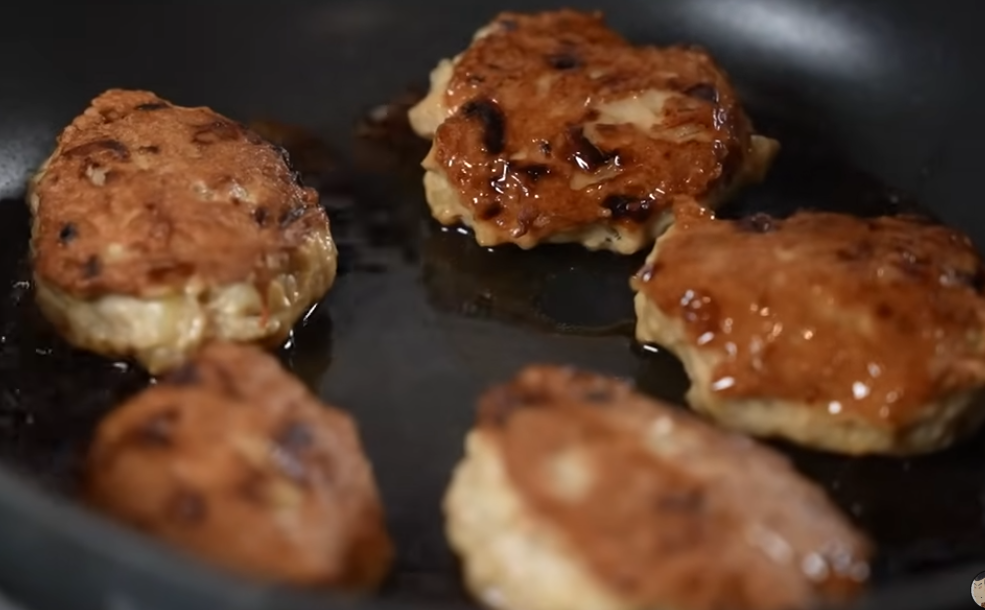
- Sear. Cook for about 2 minutes without touching them, until the bottoms are lightly browned. Flip with tongs, being careful not to press.
- Steam. Add 2 tbsp sake, cover, and cook 3 to 4 minutes without lifting the lid. The steam cooks the centers through and keeps them tender.
- Glaze. Turn the heat off briefly. Add 1½ tbsp soy sauce, 1 tbsp sake and 2 tbsp mirin. Return to low heat and roll the meatballs in the sauce until they are glossy and the liquid has thickened slightly, about 1 minute. Low heat prevents the sugars from burning.
- Plate. Arrange on a plate, spoon over the leftover glaze, and top with the raw egg yolk and shiso leaves.
Japanese Shiso Leaf Meatballs
Fluffy chicken tsukune in a soy-mirin glaze with shiso and egg yolk.
Ingredients
- 200 g ground chicken thigh
- ½ small onion, finely chopped
- 15 g ginger, grated
- 1 egg, separated
- 1 tbsp soy sauce
- ½ tbsp sake
- 1 tsp potato starch
- 2 tbsp sake (steaming)
- 1½ tbsp soy sauce (glaze)
- 1 tbsp sake (glaze)
- 2 tbsp mirin
- 5 shiso leaves
- Oil for the pan
Instructions
- Separate the egg; chop the onion finely.
- Mix chicken with 1 tbsp soy, ½ tbsp sake and ginger.
- Knead lightly until sticky and fluffy.
- Whip in the egg white for 2 to 3 minutes.
- Fold in onion and potato starch.
- Shape 5 balls with oiled hands; place in a pan over medium heat.
- Sear 2 minutes, flip gently.
- Add 2 tbsp sake, cover, steam 3 to 4 minutes.
- Add soy, sake and mirin; simmer on low until glossy.
- Serve with egg yolk and shiso.
Chef’s Tips
- Keep the mixture cold. Warm fat smears and makes the meatballs heavy, so chill the chicken until you’re ready to mix.
- Oil or wet your hands. The mixture is sticky by design, and a light coating prevents it from clinging to your palms.
- Don’t nudge them while searing. Meatballs release naturally once a crust forms, so moving them early tears the surface.
- Keep the lid on while steaming. Lifting it lets the heat escape and adds cooking time, which dries the centers.
- Use low heat for the glaze. Mirin has sugar that burns quickly, so gentle heat gives you shine instead of bitterness.
- Test one for doneness. Cut into the largest meatball; the juices should run clear and the center should be opaque (165°F / 74°C).
Common Mistakes
Overmixed, dense meatballs. This happens when the meat is squeezed hard or mixed for too long after the egg goes in. Mix quickly with an open hand, and if they have already gone dense, a little extra sauce and steam time will help soften them.
Meatballs falling apart. Usually the mixture is too wet or wasn’t mixed enough at the start. Include the potato starch, mix until sticky, and if it still seems loose, add another ½ tsp starch.
Burnt glaze. High heat scorches sugars in seconds. Turn the heat off before adding sauce, then simmer on low; if it does darken, add a splash of water and stir it back to a syrup.
Pale, unappealing color. A crowded or cold pan steams instead of sears. Preheat properly and leave space between the meatballs.
Recipe Variations
- Japanese pork meatballs (niku dango): Swap in ground pork for a richer version. This is close to the classic niku dango recipe, and pork works equally well with the same glaze.
- Vegetarian: Use crumbled firm tofu with finely chopped shiitake and a tablespoon of panko. Mix gently and pan-fry carefully.
- Gluten-free: Use tamari for the soy sauce. Potato starch is already gluten-free.
- Spicy: Stir a pinch of shichimi togarashi or ½ tsp chili paste into the glaze.
- Dairy-free: This recipe is naturally dairy-free as written.
- Low carb: Replace the mirin with 1 tbsp sake plus a little monk fruit sweetener, and serve over lettuce cups.
- Japanese meatballs with sesame seeds and vegetables: Roll the finished meatballs in toasted sesame seeds, and serve alongside sautéed peppers or shiitake for a fuller plate.
For kid-friendly meals, skip the shiso and serve the meatballs on small skewers or in rice bowls with a spoonful of the glaze.
Storage & Reheating
Refrigerator: Cool, then store the meatballs with their glaze in an airtight container for up to 3 days.
Freezer: Freeze cooked, glazed meatballs on a tray, then transfer to a freezer bag for up to 2 months. Thaw overnight in the fridge. If you enjoy planning ahead, our freezer meal ideas follow the same batch-friendly approach.
Reheating: Warm in a covered skillet over low heat with a splash of water or sake for 4 to 5 minutes. The steam refreshes the texture. A microwave works in a pinch at 50% power.
Meal prep tip: Make the meatballs ahead and add the shiso and fresh yolk only when serving. Raw egg yolk should not be stored.
Serving Suggestions
- Steamed short-grain rice: It soaks up the extra glaze and balances the salty-sweet sauce.
- Miso soup: A light, savory broth makes the meal feel complete. Our silky eggs and miso soup pairing shows an easy way to build an Asian meal around it.
- Quick cucumber salad: Tangy vinegar and crisp texture cut through the richness.
- Green tea or cold barley tea: Both are clean and slightly bitter, resetting your palate between bites.
Looking for more inspiration? Browse our easy Asian recipes and healthy Asian ideas for other simple pairings.
Nutrition Information
Values are estimates per serving (2 servings total) and will vary by brands and ingredients used.
Frequently Asked Questions
- What is tsukune?
Tsukune is a Japanese chicken meatball, traditionally skewered and grilled as yakitori. This pan-fried version keeps the same soft texture and sweet soy glaze.
- What is shiso, and where can I buy it?
Shiso, also called perilla, is a Japanese herb with a bright, minty-citrus flavor. Look in Asian markets, farmers’ markets, or well-stocked produce sections, or grow it easily in a pot.
- Can I make these without shiso?
Yes. Shiso is only a garnish here. Fresh basil, mint, or even sliced green onion will give a similar fresh contrast.
- Do I need to use raw egg yolk?
It is traditional, but optional. Use a pasteurized egg, or skip the yolk and spoon extra glaze over the meatballs.
- Can I use ground pork or turkey?
Pork is a classic option and gives a richer flavor. Ground turkey works if it isn’t extra lean; use thigh meat if possible.
- What can I use instead of sake?
Dry white wine or dry sherry can replace sake in equal amounts. For an alcohol-free version, use a splash of water with a little rice vinegar.
- What can I use instead of mirin?
Mix 2 tbsp of sake or white wine with 1 tsp sugar per 2 tbsp of mirin. The result is slightly less complex but still glossy.
- Why are my meatballs tough?
Usually the meat is lean or overworked. Choose thigh meat, mix quickly, and avoid pressing when shaping or flipping.
- Can I bake them instead?
You can bake at 400°F (200°C) for 15 to 18 minutes, then toss in the warmed glaze. You’ll lose the steamed softness but it works for larger batches.
- Can I make these as skewers?
Yes. Shape the mixture into longer ovals on soaked skewers and cook them the same way, brushing on the glaze at the end.
Conclusion
These Japanese shiso leaf meatballs prove that a few thoughtful techniques can transform simple ingredients. Light mixing, a covered steam, and a low-heat glaze give you soft, juicy meatballs that taste like they came from a small izakaya.
They are quick enough for a weeknight, and pretty enough for guests. Save the recipe or bookmark this page so it’s ready the next time you want an easy Japanese dinner.