
Healthy Asian Breakfast Recipes Start Here: the 5-minute rice bowl
A warm, protein-rich bowl built the Japanese way — quick to put together, but nothing like a quick fix.

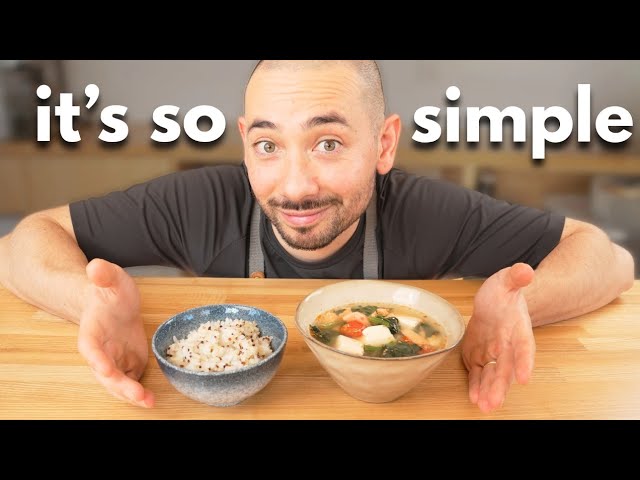
Most people looking for healthy Asian breakfast recipes aren’t looking for something elaborate. They’re looking for something that won’t leave them scraping for energy by 10 a.m. That’s the real gap with a lot of standard breakfasts — toast, cereal, even a smoothie — they’re fast, but they don’t hold. This rice bowl is built differently. It leans on a Japanese breakfast structure: a steady carbohydrate base, protein from two sources, vegetables, a fermented element, and a bit of healthy fat, all pulled together in a single bowl with a small side of miso soup.
It borrows from the traditional multi-dish Japanese breakfast — rice, miso soup, protein, pickled or cooked vegetables — but simplifies it into one pot and one bowl, which is a big part of why it works for a weekday morning. The rice is the only piece that needs planning ahead, and even that’s just a batch-cook step you do once and use for days.
If you’ve already tried our silky eggs and kimchi miso soup, this bowl sits in the same family — same warm, savory, fermented-forward approach to breakfast — but swaps in salmon and tofu as the main protein, and mixed grains instead of plain rice for more fiber.
It’s a good fit for anyone building a rotation of Asian breakfast ideas that actually hold up nutritionally: parents packing a thermos for the commute, anyone doing asian breakfast meal prep for the week, or someone just tired of a 10 a.m. energy crash.
Why This Recipe Works
The rice does more work here than it looks like. Cooking it ahead, letting it cool, and reheating it isn’t just for convenience — that cooling step converts some of the starch into resistant starch, a type your gut digests more slowly than freshly cooked rice. In practice, that generally translates to a steadier release of energy rather than a spike-and-crash pattern. Mixing in barley and quinoa on top of white rice adds fiber and a wider range of nutrients, without changing how the dish comes together.
The protein is split two ways on purpose. Flaked salmon brings omega-3 fats, which most Western diets fall short on, plus a solid dose of complete protein. Tofu adds more protein and a different texture, and it’s one of the few plant foods that shows up consistently in research on long-term health outcomes. Having protein from two sources, spread through the bowl rather than sitting on one side of the plate, is part of what supports focus and satiety through the morning — you’re not relying on one ingredient to do all the work.
Miso is the other key piece. Whisking it in off the heat, rather than boiling it, protects the live cultures that make it a fermented food, and it’s what gives the broth its depth without needing much else. Frozen spinach and cherry tomatoes round things out — spinach for fiber and micronutrients with zero prep, tomatoes for a bit of acidity that keeps the whole bowl from tasting flat.
A breakfast that holds you through the morning isn’t about one “superfood” — it’s about carbs, protein, fiber, and fat all showing up in the same bowl.
Tips Before You Start
The single most useful thing you can do is cook your rice in advance. Make a batch on a Sunday, portion it, and refrigerate — that’s the step that turns this into a genuinely 5-minute morning recipe rather than a 25-minute one.
Use canned fish packed in water rather than oil if you can find it, since it keeps the dish lighter and lets the miso and sesame flavors lead. If you only have oil-packed, drain it well and it’ll still work fine.
If you don’t have dashi powder, plain water works — miso does most of the flavor work regardless. Dashi just adds a little extra savory depth. [VERIFY: exact dashi powder brand ratio can vary; follow package instructions for the closest match to a standard dashi broth.]
Quick Recipe Information
*Prep and total time assume the rice was cooked ahead of time, as directed below. Add roughly 20 extra minutes if you’re cooking rice from scratch the same morning.
Ingredients
- 2 cups cooked mixed-grain rice — white rice cooked with barley and quinoa (the mix adds fiber and texture; plain cooked white or brown rice works as a substitute)
- 2 cups water
- 1 tsp dashi powder (adds savory depth; omit for a lighter, miso-forward broth)
- 2 tbsp white or yellow miso paste (the fermented backbone of the broth; red miso works but tastes stronger and saltier)
- 1 cup frozen spinach, thawed (fiber and micronutrients with no prep; fresh spinach, wilted in for the last minute, also works)
- 6 cherry tomatoes, halved (adds acidity to balance the richness of the salmon and miso)
- 1 can (about 5 oz) flaked wild salmon, packed in water, drained (main omega-3 source; any canned oily fish, like sardines or mackerel, is a good substitute)
- 1/2 cup firm tofu, cubed (second protein source and a softer texture contrast; drained extra-firm tofu holds its shape best)
- 1 tsp toasted sesame seeds (healthy fats and a nutty finish)
- Optional: sliced green onion or a strip of toasted nori for serving
Equipment Needed
- Small saucepan
- Rice cooker or pot (for cooking the rice ahead of time)
- Fine-mesh strainer or small bowl (for dissolving the miso)
- Wooden spoon or whisk
- Two serving bowls
Step-by-Step Instructions
- Reheat the rice. If your mixed-grain rice is already cooked and chilled, reheat it in the microwave or with a splash of water in a covered pan until steaming. This is the step that makes the whole recipe fast, and reheating chilled rice preserves more of the resistant starch than eating it fresh off the stove.
- Bring the broth to a boil. In a small saucepan, bring 2 cups of water to a boil, then stir in the dashi powder. If you’re skipping dashi, plain water is fine — the miso will still carry most of the flavor.
- Drop to a gentle simmer. Lower the heat so the broth is just simmering, not boiling hard. A rolling boil will make the spinach and tomatoes turn mushy faster than you want.
- Add the spinach. Stir in the thawed frozen spinach and let it heat through for about 1–2 minutes.
- Add the tomatoes. Drop in the halved cherry tomatoes and simmer another minute, just until they start to soften and release a little juice — you want them warmed, not collapsed.
- Add the salmon and tofu. Gently fold in the flaked salmon and cubed tofu. Since both are already cooked, they only need 1–2 minutes to warm through; stir carefully so the tofu cubes stay intact.
- Take the pan off the heat. This matters — miso loses some of its flavor and its beneficial cultures if it boils.
- Whisk in the miso. Scoop a ladle of the hot broth into a small bowl, whisk in the miso paste until smooth, then stir that mixture back into the pan. This prevents miso lumps and keeps the flavor even throughout.
- Assemble the bowls. Divide the reheated rice between two bowls, then ladle the miso broth with the vegetables, salmon, and tofu over the top — or serve the broth alongside as a small soup, whichever you prefer.
- Finish and serve. Sprinkle with toasted sesame seeds and, if using, green onion or nori. Serve immediately while the broth is hot.
5-Minute Japanese Breakfast Rice Bowl
Mixed-grain rice, miso broth, flaked salmon, and tofu — a steady, savory way to start the day.
Ingredients
- 2 cups cooked mixed-grain rice
- 2 cups water
- 1 tsp dashi powder
- 2 tbsp miso paste
- 1 cup frozen spinach, thawed
- 6 cherry tomatoes, halved
- 1 can (5 oz) flaked wild salmon, drained
- 1/2 cup firm tofu, cubed
- 1 tsp toasted sesame seeds
- Optional: green onion, nori
Instructions
- Reheat the rice.
- Boil water with dashi powder.
- Drop to a simmer.
- Add spinach, then tomatoes.
- Add salmon and tofu; warm through.
- Remove from heat.
- Dissolve and whisk in miso.
- Pour over rice bowls.
- Top with sesame seeds and serve.
Chef’s Tips
- Batch the rice, not just one portion. Cook a larger pot on the weekend and portion it into containers. Cold, day-old rice reheats better than you’d expect and holds more resistant starch than fresh.
- Drain the tofu first. Even a few minutes pressed between paper towels keeps the cubes from watering down the broth.
- Taste before adding more miso. Brands vary a lot in saltiness — start with less, taste, and add more if needed rather than the other way around.
- Keep the simmer gentle throughout. A hard boil breaks down the tomatoes and spinach faster than you want and can toughen the tofu slightly.
- Toast your own sesame seeds if you have raw ones. A minute or two in a dry pan brings out a noticeably deeper, nuttier flavor than pre-toasted seeds from a jar.
Common Mistakes
- Boiling the miso. This happens when the pan is still on the heat while you stir it in. It mutes the flavor and reduces the fermented benefits. Fix: always take the pan off the heat first.
- Using cold, straight-from-the-fridge rice without reheating properly. Rice that’s only partly warmed turns clumpy in the bowl. Reheat it fully, with a splash of water if needed, until it’s steaming and separates easily.
- Adding tomatoes too early. Simmering them the whole time turns them mushy and washes out their acidity, which is what balances the dish. Add them in the last minute or two only.
- Over-salting by stacking sodium sources. Dashi, miso, and canned salmon all bring their own sodium. Taste as you go and skip the dashi if your miso is already assertive.
- Skipping the sesame seeds. They seem optional, but they add fat and texture that round out the bowl — without them it can taste a little flat.
Recipe Variations
- Vegetarian: Skip the salmon and double the tofu, or add a soft-boiled egg for extra protein.
- Gluten-Free: Check your miso and dashi powder labels — some brands use barley in processing or add wheat-based flavorings. Look for a certified gluten-free miso, and swap the barley in the rice mix for more quinoa.
- Spicy: Stir in a spoonful of gochujang or a dash of chili oil along with the miso for heat with a Korean edge.
- Dairy-Free: This recipe is naturally dairy-free as written — no changes needed.
- Low-Carb: Swap the rice for cauliflower rice or a smaller portion of the mixed grains, and lean more on the tofu and salmon for volume.
- Kid-Friendly: Go lighter on the miso, skip the dashi, and flake the salmon extra fine so it blends into the rice rather than standing out.
- Kimchi Twist: Stir a spoonful of chopped kimchi in with the spinach for a tangier, more fermented-forward bowl — similar in spirit to our silky eggs and kimchi miso soup.
Storage & Reheating
Refrigerator: Store the broth and rice separately in airtight containers for up to 3 days. Keeping them apart stops the rice from turning soggy.
Freezer: The rice freezes well on its own, portioned flat in freezer bags, for up to 1 month. The miso broth with tofu and salmon doesn’t freeze as well — the tofu’s texture turns spongy after thawing — so it’s best made fresh.
Reheating: Warm the broth gently on the stovetop over low heat (don’t let it boil), and reheat the rice separately with a splash of water, covered, until steaming.
Shelf life: Best eaten within 2–3 days for the broth; cooked rice keeps up to 4 days refrigerated or 1 month frozen.
Meal prep tip: Cook a big batch of mixed-grain rice at the start of the week — this is the same batch-cooking logic behind our loaded egg muffins for grab-and-go mornings, just applied to rice instead of eggs.
Serving Suggestions
- Green tea or hojicha: A light, slightly bitter tea cuts through the richness of the salmon and miso without adding sugar or extra calories.
- A side of pickled vegetables: Quick-pickled cucumber or radish adds crunch and acidity, echoing the traditional multi-dish Japanese breakfast structure.
- Toasted nori strips: Torn over the top just before eating, they add a mild brininess and a bit of crunch.
- A soft-boiled egg on the side: If you want more protein for a longer, more active morning.
- Fresh fruit after: Something simple like orange slices or berries balances the savory bowl with a touch of sweetness.
Nutrition Information
Calculated from the ingredients and quantities listed above, divided across 2 servings, using standard USDA reference values.
Frequently Asked Questions
-
Can I make this without dashi powder?
Yes. Plain water works as the broth base — miso carries most of the flavor on its own. Dashi just adds an extra layer of savory depth, so it’s a nice-to-have, not a must-have.
-
What can I use instead of canned salmon?
Any canned oily fish works well here — mackerel and sardines are both good substitutes and bring a similar omega-3 profile. If you’d rather skip fish altogether, doubling the tofu is the simplest swap.
-
Is this recipe good for meal prep?
The rice portion is excellent for meal prep — cook a big batch and portion it out for the week. The broth itself is best made fresh each morning since it only takes about 10–15 minutes at a gentle simmer.
-
Why cool the rice before reheating it instead of eating it fresh?
Cooling cooked rice converts some of its starch into resistant starch, which digests more slowly than freshly cooked starch. In practice, this tends to support a steadier release of energy rather than a quick spike and drop.
-
Can I use fresh spinach instead of frozen?
Yes — stir in a couple of handfuls of fresh spinach during the last minute of simmering, just until wilted. Frozen is used here mainly for convenience, since it needs no washing or chopping.
-
Is this suitable for a low-sodium diet?
As written, it runs on the higher end for sodium because of the miso, dashi, and canned salmon combined. If you’re watching sodium, use a low-sodium miso, skip the dashi powder, and rinse your canned salmon before adding it.
-
What’s the best rice mix to use?
A blend of white rice with barley and quinoa gives the best balance of texture and fiber, but plain white or brown rice works fine too — the resistant starch benefit still applies as long as you cool and reheat it.
-
Can kids eat this?
Generally yes, though you may want to go lighter on the miso and skip the dashi, since both add a fairly assertive savory-salty flavor that isn’t always a hit with younger palates.
-
How is this different from a typical Japanese breakfast?
A traditional Japanese breakfast usually spreads rice, miso soup, protein, and pickled vegetables across several small dishes. This recipe combines the same core elements into one bowl and one pot, which trims the prep and cleanup considerably.
-
Can I turn this into a bento-style lunch instead?
Yes — pack the rice, salmon, and tofu cold or at room temperature in a bento box, and bring the miso broth separately in a small thermos to keep the components from getting soggy together.
Watch How It’s Made
Prefer to see the technique in action? Here’s a short walkthrough of the method this recipe is based on.
The Bottom Line on Healthy Asian Breakfast Recipes
What makes this bowl worth adding to your rotation isn’t any single ingredient — it’s the structure. Carbohydrate, protein from two sources, fiber, fermented flavor, and a bit of fat, all in one place, is a fundamentally different approach from toast or a bowl of cereal, and it shows up in how you feel a couple of hours later.
Once the rice is cooked ahead of time, the rest genuinely comes together in about five active minutes. It’s a solid entry point if you’re building out a wider rotation of healthy Asian breakfast recipes, whether that means pairing it with our easy Asian breakfast recipes collection or rotating it alongside the kimchi miso soup bowl for variety through the week.
Save this one for a morning when you want something that actually holds you — and if you’re after more freezer-friendly and grab-and-go ideas for busy mornings, there’s more where this came from.
Healthy Asian Breakfast Recipes Start Here
Ingredients
- 2 cups cooked mixed-grain rice — white rice cooked with barley and quinoa (the mix adds fiber and texture; plain cooked white or brown rice works as a substitute)
- 2 cups water
- 1 tsp dashi powder (adds savory depth; omit for a lighter, miso-forward broth)
- 2 tbsp white or yellow miso paste (the fermented backbone of the broth; red miso works but tastes stronger and saltier)
- 1 cup frozen spinach, thawed (fiber and micronutrients with no prep; fresh spinach, wilted in for the last minute, also works)
- 6 cherry tomatoes, halved (adds acidity to balance the richness of the salmon and miso)
- 1 can (about 5 oz) flaked wild salmon, packed in water, drained (main omega-3 source; any canned oily fish, like sardines or mackerel, is a good substitute)
- 1/2 cup firm tofu, cubed (second protein source and a softer texture contrast; drained extra-firm tofu holds its shape best)
- 1 tsp toasted sesame seeds (healthy fats and a nutty finish)
- Optional: sliced green onion or a strip of toasted nori for serving
Instructions
- 2 cups cooked mixed-grain rice — white rice cooked with barley and quinoa (the mix adds fiber and texture; plain cooked white or brown rice works as a substitute)
- 2 cups water
- 1 tsp dashi powder (adds savory depth; omit for a lighter, miso-forward broth)
- 2 tbsp white or yellow miso paste (the fermented backbone of the broth; red miso works but tastes stronger and saltier)
- 1 cup frozen spinach, thawed (fiber and micronutrients with no prep; fresh spinach, wilted in for the last minute, also works)
- 6 cherry tomatoes, halved (adds acidity to balance the richness of the salmon and miso)
- 1 can (about 5 oz) flaked wild salmon, packed in water, drained (main omega-3 source; any canned oily fish, like sardines or mackerel, is a good substitute)
- 1/2 cup firm tofu, cubed (second protein source and a softer texture contrast; drained extra-firm tofu holds its shape best)
- 1 tsp toasted sesame seeds (healthy fats and a nutty finish)
- Optional: sliced green onion or a strip of toasted nori for serving