
Good Breakfast Smoothie Recipes for slow mornings on a fast schedule
One base recipe, five days of flavor, and a fridge-to-blender routine that actually sticks.
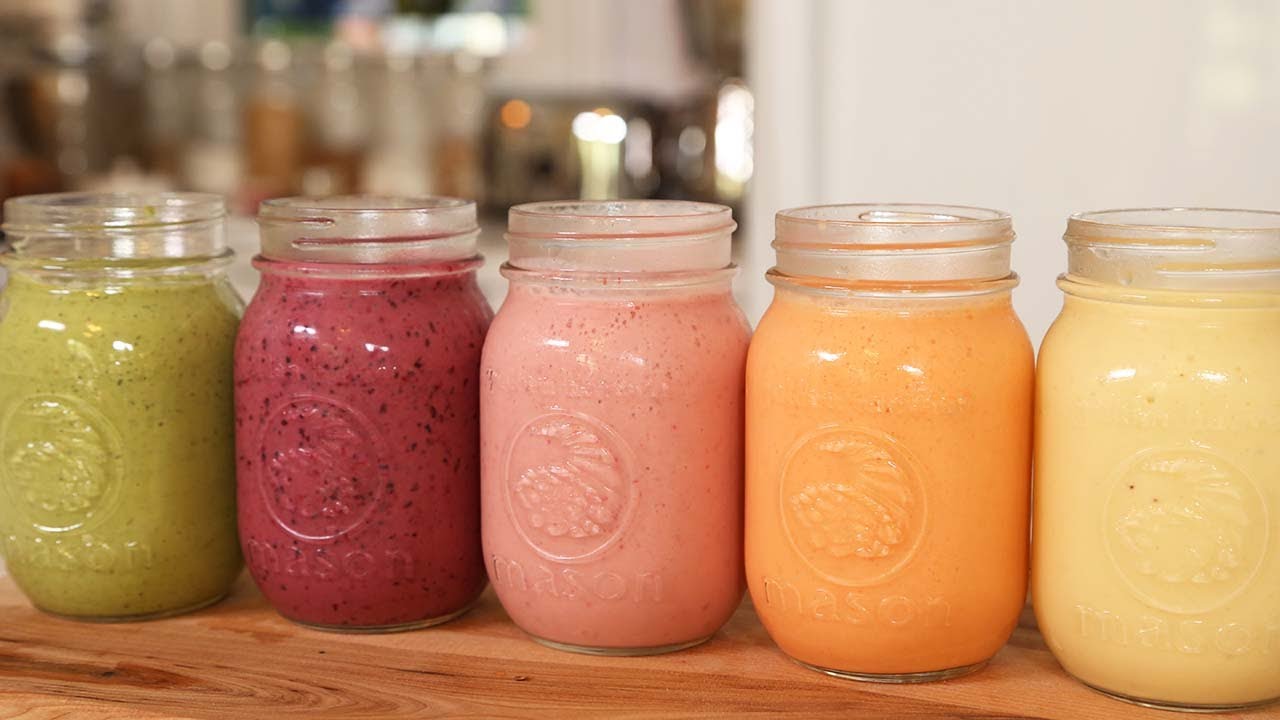
Some mornings there’s time for a full breakfast, and some mornings there’s time for exactly one thing: whatever fits in a to-go cup. That’s the gap good breakfast smoothie recipes are built to fill. A smoothie made the right way — with frozen fruit instead of ice, protein from yogurt, and a liquid base that actually tastes like something — can carry you through the first few hours of the day without the sugar crash of a pastry or the prep time of a full pan of eggs.
What makes a smoothie worth making again isn’t a fancy ingredient list. It’s the ratio: enough liquid to blend smoothly, enough protein to keep you full past 10 a.m., and fruit that’s frozen solid so the texture stays thick instead of slushy. Get that balance right once, and you can rotate the fruit combination all week without ever repeating the same glass twice.
This guide walks through one reliable base recipe — a tropical, protein-forward smoothie that works as well on a Monday as it does on a lazy Sunday — along with the technique behind it, common mistakes that thin out a smoothie’s texture, and enough variations to cover breakfast smoothie recipes for an entire week without a grocery list overhaul.
Why This Recipe Works
The single biggest factor in a good smoothie is temperature, not equipment. Fresh fruit blended with ice cubes dilutes fast, because ice melts the moment it hits the blade and the liquid-to-fruit ratio tips out of balance. Frozen fruit solves that problem from the start — it’s already cold, it doesn’t melt into the mix, and it gives the smoothie its thickness instead of borrowing it from water.
Protein does the second half of the work. A half cup of Greek yogurt isn’t just there for creaminess — it slows down how quickly the natural sugars in the fruit hit your bloodstream, which is a big part of why a smoothie with yogurt keeps you satisfied longer than straight fruit juice. It’s also what turns this from a fruit smoothie recipe into something that can genuinely stand in for breakfast.
A smoothie is really just a ratio problem: enough cold, enough protein, enough liquid to move the blades — solve for those three and the fruit combination becomes optional.
The ginger in this particular combination isn’t decorative. A small amount cuts through the sweetness of pineapple and mango and keeps the smoothie from tasting one-note, the same way a squeeze of lime brightens a fruit salad.
Tips Before You Start
Freeze your own fruit rather than relying on store-bought bags when you can. Spread fresh pineapple, mango, and banana in a single layer on a parchment-lined baking sheet before freezing, then transfer to a bag once solid. This keeps the pieces from clumping into one frozen block, so you can pour out exactly what you need.
Add liquid to the blender first, before the fruit and yogurt. It sounds like a small detail, but liquid near the blades gets everything moving immediately, instead of the blender struggling against a dense pile of frozen fruit sitting on dry blades.
Quick Recipe Information
Ingredients
- ½ cup pineapple juice (the liquid base — orange juice or unsweetened almond milk both work as a swap)
- ½ cup plain Greek yogurt (adds protein and creaminess; vanilla-flavored works too but adds extra sugar)
- 1 cup frozen pineapple chunks (the thickness and tang come from here — freeze fresh pineapple yourself for the best texture)
- ½ cup frozen mango chunks (rounds out the sweetness; frozen peaches are a fine substitute)
- 1 frozen banana, sliced (freezes into a naturally creamy texture — this is what keeps the smoothie thick without added ice)
- ½-inch piece fresh ginger, grated (cuts the sweetness; ¼ teaspoon ground ginger works in a pinch)
Equipment Needed
- Blender (standard or single-serve)
- Measuring cups
- Cutting board and paring knife
- Microplane or grater, for the ginger
- Baking sheet and freezer bags, for prepping fruit ahead
Step-by-Step Instructions
- Pour the pineapple juice into the blender first. Liquid near the blades helps the motor catch and move everything smoothly instead of stalling against solid frozen fruit.
- Add the Greek yogurt. Adding it right after the liquid, before the frozen fruit goes in, keeps it from sticking to the sides of the blender.
- Layer in the frozen pineapple, mango, and banana. Frozen fruit on top of the liquid and yogurt blends more evenly than fruit at the very bottom, near the blades.
- Grate the fresh ginger directly into the blender. A little goes a long way — start with a half-inch piece and add more only if you want a stronger bite.
- Blend on high for 45–60 seconds, stopping once to scrape down the sides if needed. The smoothie is ready when it’s thick, smooth, and pours slowly off a spoon rather than dripping like juice.
- Taste before pouring. If it’s thicker than you’d like, add a splash more pineapple juice and pulse for a few seconds; if it’s thinner than you’d like, that usually means the fruit wasn’t fully frozen — a trick worth remembering for next time.
Tropical Sunshine Breakfast Smoothie
A thick, protein-packed pineapple-mango smoothie with a hint of fresh ginger — ready in five minutes, no cooking required.
Ingredients
- ½ cup pineapple juice
- ½ cup plain Greek yogurt
- 1 cup frozen pineapple chunks
- ½ cup frozen mango chunks
- 1 frozen banana, sliced
- ½-inch fresh ginger, grated
Instructions
- Add pineapple juice to the blender.
- Add the Greek yogurt.
- Layer in frozen pineapple, mango, and banana.
- Grate in the fresh ginger.
- Blend on high 45–60 seconds until smooth and thick.
- Taste, adjust thickness with a splash of juice if needed, and serve.
Chef’s Tips
- Freeze fruit in a single layer. Spreading pieces out on a baking sheet before bagging them keeps them from freezing into one solid clump you have to chip apart.
- Liquid goes in first, always. It protects the blender motor and gets a smoother blend on the first try, without needing to stop and stir halfway through.
- Use a frozen banana instead of extra ice. It adds thickness and a subtle natural sweetness that ice can’t replicate — and it won’t dilute the flavor.
- Pre-portion smoothie packs on a slow afternoon. Bag the frozen fruit and ginger for several smoothies at once, so weekday mornings only require yogurt, liquid, and a blender.
- Taste before you commit to a full glass. Fruit ripeness varies, so the sweetness of this smoothie can shift week to week — a small taste lets you adjust before pouring.
- Add mix-ins after the base is blended smooth. Protein powder, chia seeds, or hemp seeds blend in more evenly once the fruit and yogurt are already combined, rather than clumping at the bottom.
Common Mistakes
- Using ice instead of frozen fruit. It happens when fresh fruit is on hand but nothing’s frozen ahead of time. Ice melts fast and waters down flavor — the fix is keeping a stocked freezer bag of pre-cut fruit so ice is never the fallback.
- Adding frozen fruit before any liquid. This is an easy habit to fall into when rushing, but it strains the blender motor and leaves dry pockets of unblended fruit. Always start with liquid near the blades.
- Overfilling the blender. Packing in too much frozen fruit at once looks efficient but often means the blades can’t fully circulate the mixture. Blending in two smaller batches gets a smoother result than forcing one oversized batch.
- Not accounting for flavored yogurt. Vanilla or fruit-flavored Greek yogurt adds noticeably more sugar than plain yogurt, which can make a smoothie taste unexpectedly sweet. If a lighter smoothie is the goal, plain yogurt keeps that in check.
- Skipping the taste test. Because fruit ripeness varies, the same recipe can taste different every time. A quick taste before pouring — and a splash more juice or a squeeze of citrus if needed — avoids serving something too tart or too thick.
Recipe Variations
This base ratio of liquid, yogurt, and frozen fruit is flexible enough to carry a full week of healthy breakfast smoothies without repeating the same glass twice. Here are a few directions to take it:
Vegetarian
Already vegetarian as written — no substitutions needed.
Gluten-Free
Naturally gluten-free. Just double-check that any protein powder or mix-in you add is certified GF.
Dairy-Free
Swap the Greek yogurt for a plain coconut or almond-milk yogurt, and use almond milk in place of pineapple juice for a lighter, non-dairy version.
Low-Carb
Cut the pineapple and mango back to a half cup total, lean on frozen berries instead, and stir in a scoop of unflavored protein powder to keep it filling. [VERIFY exact carb count for your specific protein powder]
Kid-Friendly
Skip the ginger and use orange juice instead of pineapple juice for a milder, sweeter flavor kids tend to prefer.
Spiced
Add a pinch of ground cinnamon and a very small pinch of cayenne along with the ginger for a warmer, slightly spiced version.
Five-Day Rotation
Keep the same liquid-plus-yogurt base and rotate the fruit: orange, frozen peach, and shredded carrot one day; watermelon, strawberry, and raspberry the next; pomegranate juice with frozen blueberries, blackberries, and cherries for an antioxidant-heavy version; and orange juice with frozen kiwi, a handful of greens, and half a frozen avocado for a creamier, green smoothie to close out the week.
Storage & Reheating
Refrigerator: A blended smoothie keeps in an airtight container for about 24 hours. Expect some separation — a quick stir or shake brings it back together.
Freezer: For longer storage, freeze the unblended ingredients instead of the finished smoothie. Portion the frozen fruit and ginger into bags or jars, and they’ll keep well for up to three months.
Reheating: There’s no reheating step here — this is a cold recipe by design. If a frozen smoothie pack has been stored too long and turns icy, let it sit at room temperature for five minutes before blending to make it easier on the motor.
Shelf life: Plan on same-day drinking for the best texture, or up to 24 hours refrigerated. Frozen fruit portions last up to three months in the freezer.
Meal prep tip: Set aside twenty minutes on a Sunday to portion five days’ worth of frozen fruit packs. It turns this into one of the more realistic easy healthy breakfast routines to actually keep up with, since the only morning task left is blending.
Serving Suggestions
On its own, this smoothie is a full breakfast, but a few pairings round it out on slower mornings:
- A slice of whole-grain toast (adds fiber and a bit of chew alongside a smooth, cold drink)
- A handful of granola stirred in or served alongside (adds crunch and turns the smoothie into more of a bowl)
- A soft-boiled egg (adds extra protein for anyone who needs breakfast to hold them past noon)
- Iced coffee or green tea (a caffeinated pairing without competing flavors)
For mornings with a bit more time, this smoothie also fits well alongside loaded egg muffins for a more complete plate.
Nutrition Information
Calculated per serving (recipe makes 2 servings), based on standard USDA values for the ingredients and quantities listed above:
Sugar and carbohydrate values will shift with fruit ripeness — very ripe banana or pineapple can push natural sugar content noticeably higher than these estimates. Swapping plain Greek yogurt for a vanilla-flavored version will also raise both sugar and total carbs. These figures are estimates only and will vary based on specific brands and substitutions used.
Frequently Asked Questions
Can I use fresh fruit instead of frozen?
Yes, but you’ll need to add ice to get the same thick texture, which can slightly dilute the flavor. For the best consistency, freeze fresh fruit ahead of time instead.
What can I use instead of pineapple juice?
Orange juice or unsweetened almond milk both work well as a swap and won’t throw off the ratio of liquid to fruit.
Is this a good high protein breakfast smoothie?
With Greek yogurt as the base, it lands around 7 grams of protein per serving. Stirring in a scoop of protein powder can push that significantly higher for a more filling, high protein breakfast smoothie.
Can I make this ahead of time?
The fruit and ginger portions freeze well for up to three months. The finished, blended smoothie is best enjoyed the same day, though it will keep refrigerated for about 24 hours with some separation.
Why does my smoothie turn out too thin?
This usually means the fruit wasn’t fully frozen, or too much liquid was added before blending. Start with less liquid and add more gradually until the texture is right.
Can I leave out the ginger?
Yes — it adds a bright, slightly spicy note, but the smoothie holds together fine without it if the flavor isn’t for you.
What blender works best for this?
A standard countertop blender or a single-serve blender both handle frozen fruit well, as long as liquid goes in first to help the blades catch.
How do I turn this into a green smoothie?
Add a handful of spinach or another mild leafy green — it blends in without changing the flavor much, especially alongside sweeter fruit like mango or pineapple.
Is this recipe kid-friendly?
Yes, especially with the ginger left out and orange juice used in place of pineapple juice for a milder flavor.
Can I add oats for extra fiber?
A small handful of rolled oats blends in well and adds fiber without changing the texture much, though it will make the smoothie noticeably thicker. [VERIFY exact fiber increase per specific oat brand]
What’s the difference between this and a smoothie bowl?
The ingredients are nearly identical — a smoothie bowl just uses less liquid to keep the mixture thick enough to eat with a spoon and top with granola or fruit.
Watch: More Breakfast Smoothie Ideas
Good Breakfast Smoothie Recipes Worth Repeating
What makes a smoothie recipe worth keeping around isn’t novelty — it’s whether it actually gets made on a Tuesday morning with five minutes to spare. This tropical, protein-forward version checks that box: frozen fruit does the work ice can’t, Greek yogurt adds enough protein to make it breakfast rather than dessert, and the ratio scales easily to whatever fruit is in season.
Once the base technique is down — liquid first, frozen fruit for thickness, protein for staying power — it becomes one of those easy smoothie recipes that adapts to whatever’s in the freezer, whether that’s berries, mango, or a handful of greens sneaked in for good measure.
If mornings call for even more make-ahead options, the single-serve smoothie recipes and protein shake recipes on the site are worth a look, along with vegan smoothie recipes and keto-friendly versions for anyone working within specific dietary needs.
Good Breakfast Smoothie Recipes for slow mornings on a fast schedule
Ingredients
- ½ cup pineapple juice (the liquid base — orange juice or unsweetened almond milk both work as a swap)
- ½ cup plain Greek yogurt (adds protein and creaminess; vanilla-flavored works too but adds extra sugar)
- 1 cup frozen pineapple chunks (the thickness and tang come from here — freeze fresh pineapple yourself for the best texture)
- ½ cup frozen mango chunks (rounds out the sweetness; frozen peaches are a fine substitute)
- 1 frozen banana, sliced (freezes into a naturally creamy texture — this is what keeps the smoothie thick without added ice)
- ½ -inch piece fresh ginger, grated (cuts the sweetness; ¼ teaspoon ground ginger works in a pinch)
Instructions
- ½ cup pineapple juice (the liquid base — orange juice or unsweetened almond milk both work as a swap)
- ½ cup plain Greek yogurt (adds protein and creaminess; vanilla-flavored works too but adds extra sugar)
- 1 cup frozen pineapple chunks (the thickness and tang come from here — freeze fresh pineapple yourself for the best texture)
- ½ cup frozen mango chunks (rounds out the sweetness; frozen peaches are a fine substitute)
- 1 frozen banana, sliced (freezes into a naturally creamy texture — this is what keeps the smoothie thick without added ice)
- ½-inch piece fresh ginger, grated (cuts the sweetness; ¼ teaspoon ground ginger works in a pinch)