
Sheet Pan Roasted Vegetables: one pan, three ways to eat them
Caramelized, herby, and flexible enough to become porridge, zoodle pasta, or a poached egg breakfast.

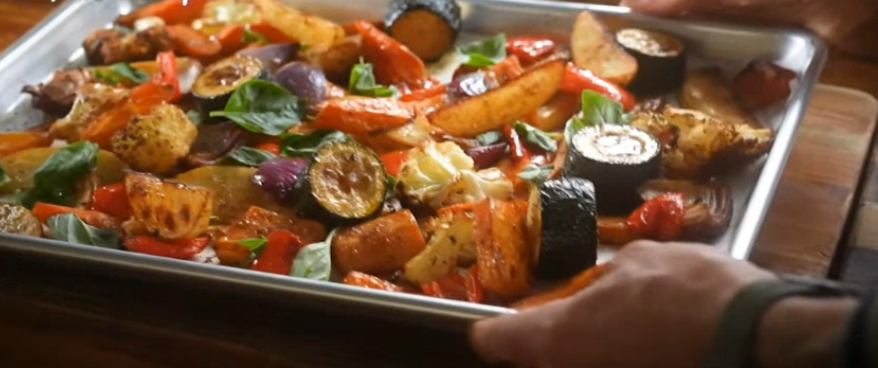
Sheet pan roasted vegetables are the kind of dish that quietly earns its spot in the weekly rotation. You chop, toss with olive oil and herbs, and let the oven do the slow work of turning eggplant, zucchini, peppers, tomatoes and garlic into something sweet, soft and deeply savory.
What makes this version useful is what happens afterward. The roasted vegetables are good on their own as an easy roasted vegetable dinner, but they also work as a topping for almond porridge, a sauce for zucchini noodles, or a savory partner for a poached egg on sweet potato toast. One tray, a week of variety.
I like to roast a big batch on Sunday, when the oven is on anyway. By Wednesday, a spoonful of these colorful roasted vegetables can turn a plain breakfast or a quick lunch into a real meal, and the whole thing stays naturally paleo, dairy-free and healthy.
Why This Sheet Pan Roasted Vegetables Recipe Works
The method uses two temperatures on purpose. The first 30 minutes at 400°F drives off moisture and starts browning. Zucchini, eggplant and tomato are full of water, and if they can’t shed it, they steam instead of roast. Fluffing the vegetables halfway through exposes fresh surfaces to dry heat and keeps the edges from sticking to the foil.
The final 20 minutes at 300°F is the gentle finish. The lower heat lets natural sugars in the onion, peppers and tomatoes concentrate and caramelize without scorching the garlic or the herbs. You get jammy centers and browned edges rather than a burnt top and a raw middle.
Roast hot to drive off water, then low to build sweetness. Two temperatures, one very good tray.
A drizzle of aged balsamic at the end matters more than it looks. Its syrupy acidity lifts the richness of the olive oil and makes the vegetables taste brighter, not just softer.
Tips Before You Start
Cut everything to a similar size. Eggplant and zucchini should be about half an inch, bite-sized pieces. Peppers and onion go into thin strips. Tomatoes are cut slightly larger because they collapse the fastest.
Choose tomatoes that are still firm. Soft, ripe tomatoes turn to liquid and slow down browning for everything around them.
Quick Recipe Information
Ingredients
Roasted vegetables
- 2–3 medium Italian eggplants (they turn creamy and absorb the olive oil; any eggplant works, but peel large, seedy ones)
- 2 bell peppers, red, yellow, orange or green (sweetness and color; red and orange are the sweetest)
- 2 tomatoes, still firm (add juicy acidity; Roma tomatoes hold their shape best)
- 2 large zucchini (mild and tender; yellow squash is a fine swap)
- 1 yellow onion (caramelizes into the sweet backbone of the tray)
- 10–12 small garlic cloves, peeled (roasted whole, they turn mellow and spreadable)
- ½ tsp fresh rosemary and ½ tsp fresh thyme, plus extra for garnish (woody herbs handle long roasting; use a third as much if dried)
- Olive oil (carries heat and flavor; avocado oil works too)
- Coarse salt and pepper, to taste
- Aged balsamic vinegar, for drizzling after roasting (adds syrupy acidity)
Variation 1: Paleo almond porridge
- 1½ cups stock (chicken, vegetable, or water; try my chicken bone broth)
- 1⅓ cups almond flour (use 1½ cups for a thicker texture)
- Coarse salt, to taste
Variation 2: Zoodle pasta
- 1 large, fat zucchini (fat ones spiralize into longer noodles)
- 2 tsp capers, drained (a salty, briny pop)
Variation 3: Sweet potato toast with poached egg
- 1–2 eggs per person
- 1 tbsp rice vinegar or distilled vinegar (helps the whites set neatly)
- 1 medium sweet potato, preferably a even, tube shape (for uniform slices)
Equipment Needed
- Large rimmed baking sheet (or two) and aluminum foil
- Sharp chef’s knife and cutting board
- Medium soup pot with lid and whisk (for the porridge)
- Spiralizer (for zoodles) and large skillet
- Toaster, saucepan and slotted spoon (for the sweet potato toast and poached egg)
Step-by-Step Instructions
- Prep the oven and vegetables. Preheat the oven to 400°F. Dice the eggplant and zucchini into ½-inch pieces, slice the peppers and onion into thin strips, and cut the tomatoes slightly larger. Uniform pieces finish at the same time.
- Season the pan. Line a large baking sheet (you may need two) with foil. Spread the vegetables in an even layer, toss generously with olive oil, salt and pepper, then add the peeled garlic and fresh herbs. The vegetables should glisten, not pool with oil.
- First roast. Bake for 15 minutes. The edges should just begin to soften and brown.
- Fluff and continue. Stir or fluff the vegetables and bake 15 more minutes. This releases trapped steam and browns new surfaces.
- Finish low. Lower the oven to 300°F and roast about 20 minutes, until the vegetables are soft, jammy and caramelized at the edges. If you use two pans, check the bottom one about 5 minutes early.
- Balsamic and cool. Drizzle with aged balsamic and set aside to cool slightly. They taste even better once they’ve rested and the juices mingle.
- Variation 1: Almond porridge. Bring the stock to a boil in a covered pot and add a little salt. Slowly stream in the almond flour while whisking constantly to prevent lumps. Simmer 10–15 minutes, then turn off the heat and cover until serving. Top with a few tablespoons of roasted vegetables and serve hot or at room temperature.
- Variation 2: Zoodle pasta. Spiralize the zucchini. Warm a few tablespoons of roasted vegetables in a large skillet (add a little olive oil if you like), add the zoodles and capers, toss quickly and serve immediately so the noodles stay crisp-tender.
- Variation 3: Sweet potato toast with poached egg. Slice the sweet potato lengthwise ¼ inch thick and toast on high for 2–3 rounds until cooked through and golden. Meanwhile, bring a saucepan two-thirds full of water to a boil, lower to a simmer, add the vinegar and swirl with a fork. Ease in a cracked egg and cook about 4 minutes, then drain on a paper towel. Top the toast with the egg and 1–2 tablespoons of roasted vegetables.
Sheet Pan Roasted Vegetables
Caramelized eggplant, zucchini, peppers and tomato, served three ways for easy meal variety.
Ingredients
- 2–3 medium Italian eggplants
- 2 bell peppers
- 2 firm tomatoes
- 2 large zucchini
- 1 yellow onion
- 10–12 small garlic cloves, peeled
- ½ tsp rosemary + ½ tsp thyme, plus extra
- Olive oil, salt and pepper
- Aged balsamic vinegar, to finish
- Porridge: 1½ cups stock, 1⅓ cups almond flour, salt
- Zoodles: 1 large zucchini, 2 tsp capers
- Toast: 1–2 eggs per person, 1 tbsp vinegar, 1 sweet potato
Instructions
- Preheat oven to 400°F. Dice eggplant and zucchini ½ inch; slice peppers and onion; cut tomatoes slightly larger.
- Spread on a foil-lined sheet pan. Toss with olive oil, salt, pepper, garlic and herbs.
- Bake 15 minutes, fluff, bake 15 more.
- Lower to 300°F and bake 20 minutes until caramelized. Drizzle with balsamic and cool.
- Porridge: boil stock, whisk in almond flour, simmer 10–15 minutes, top with veggies.
- Zoodles: warm veggies in a skillet, toss with zoodles and capers, serve at once.
- Toast: toast sweet potato slices 2–3 rounds, poach egg 4 minutes in vinegared simmering water, stack with veggies.
Chef’s Tips
- Use foil, not parchment. At 400°F, foil handles the heat and makes cleanup easy, and the browned bits are simple to scrape up.
- Salt after tossing with oil. Oil coats the surface first so the salt sticks evenly instead of drawing out too much water early.
- Keep the garlic whole. Minced garlic burns in a long roast; whole cloves soften into sweet, creamy pockets.
- Add the balsamic at the end. Heat turns it bitter and evaporates its flavor, while a finishing drizzle stays glossy and bright.
- Fresh herbs are worth it. Rosemary and thyme release oils slowly, so they perfume the whole pan rather than tasting dusty.
- Let it cool before storing. Sealing warm vegetables traps steam and makes them soggy.
Common Mistakes
1. Crowding the pan
It happens when we want to save dishes. Crowded vegetables steam and turn mushy. Prevent it by using two pans, or roasting in batches. To fix a soggy tray, spread it out and return it to the oven at 425°F for 10 minutes.
2. Uneven cutting
Small pieces burn while large chunks stay firm. Cut to a consistent size and keep tomatoes slightly bigger. If it’s already happened, pick out the finished pieces and continue roasting the rest.
3. Skipping the fluff
Without stirring, the bottom layer stews in its own juices. Set a timer for 15 minutes as a reminder. If you forgot, stir now and add a few extra minutes at the lower temperature.
4. Too little oil
Dry patches scorch instead of caramelizing. Toss until the vegetables shine. If they look dry mid-roast, drizzle a little more oil during the fluff.
5. Using very ripe tomatoes
Overripe tomatoes collapse into liquid. Choose firm ones, or add them for the last 25 minutes of roasting if yours are soft.
Recipe Variations
- Vegetarian: The base recipe already is. Add chickpeas for the last 20 minutes for extra protein.
- Gluten-free: Naturally gluten-free. Check your balsamic and stock labels.
- Spicy: Add red pepper flakes or smoked paprika with the herbs, or finish with chili crisp.
- Dairy-free: Already dairy-free. Skip any cheese toppings and use olive oil throughout.
- Low carb: Skip the sweet potato toast and serve over zoodles or cauliflower rice.
- Kid-friendly: Cut vegetables smaller, skip the capers, and toss the roasted veggies with pasta and a little parmesan.
- Shakshuka-style: Crack eggs into the finished tray and bake until set, similar to my healthy shakshuka.
Storage & Reheating
Refrigerator: Cool completely, then store in an airtight container for up to 4 days.
Freezer: Freeze in flat portions for up to 2 months. Texture softens after thawing, so it’s best for sauces, porridge toppings and skillet dishes.
Reheating: Warm in a skillet over medium heat or in a 375°F oven for 10 minutes. The microwave works but softens the edges.
Meal prep: Roast one big tray and keep the almond porridge, zoodles and sweet potato toast components separate. Poach eggs and spiralize zucchini fresh.
Serving Suggestions
- Over pasta or zoodles: The roasted juices act as a light sauce. Try them with my paleo spaghetti noodles with cashew cream sauce.
- With eggs: Soft eggs and jammy vegetables complement each other. See the baked eggs with ricotta, tomato and basil.
- On toast: Spoon onto crusty bread with feta, like this feta tomato basil toast.
- Inside a frittata: Leftovers fold neatly into a Mediterranean frittata.
- Alongside grilled meat: Their sweetness balances savory lamb or chicken, such as paleo mini lamb burgers.
Nutrition Information
Per 313g serving of roasted vegetables only. Nutrition values are automatically calculated estimates and should be used as an approximation.
Frequently Asked Questions
- What temperature is best for sheet pan roasted vegetables?
This recipe starts at 400°F for browning and finishes at 300°F for deep caramelization. For firmer vegetables, 425°F for a shorter time also works.
- Why are my roasted vegetables soggy?
Usually crowding or too little heat. Use a single layer, two pans if needed, and fluff halfway through.
- Can I use other vegetables?
Yes. Broccoli, cauliflower, mushrooms and squash all work. Add dense vegetables earlier and quick-cooking ones later.
- Do I need to salt eggplant first?
Not for Italian eggplants, which are mild and less bitter. The long roast handles the moisture.
- Can I use dried herbs?
Yes, use about a third of the amount, since dried herbs are more concentrated.
- Is this recipe paleo and healthy?
The base vegetables and porridge are paleo-friendly, and the dish is high in fiber and low in calories.
- Can I make it ahead?
Definitely. Roast up to 4 days ahead and reheat in a skillet.
- How do I keep zucchini from getting mushy?
Cut it to half-inch pieces, give it space on the pan, and don’t overcook it.
- Can I freeze roasted vegetables?
Yes, for up to 2 months. The texture softens, so use them in sauces, soups or skillet dishes.
- What if I only have one baking sheet?
Roast in two batches, or reduce the quantity so vegetables sit in a single layer.
Conclusion
Sheet pan roasted vegetables are simple, forgiving and endlessly adaptable. A little knife work and two oven temperatures give you a tray of caramelized vegetables that works for dinner, breakfast, or meal prep.
Save this recipe for your next batch-cooking day, and try one of the three variations to see how far a single pan can stretch. If you want more ideas, keep exploring the kitchen.